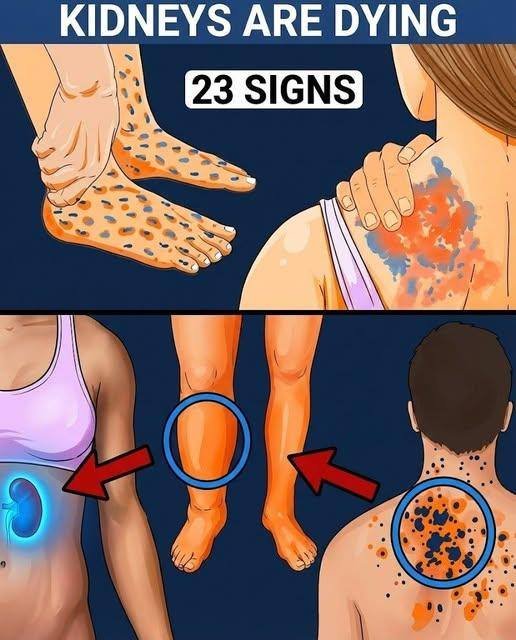
Kidney disease is often called a “silent” condition because symptoms can be subtle and easy to overlook—especially in early stages. Here are 23 weird or easily missed signs that could point to kidney problems:
1. Foamy or bubbly urine
Persistent foam (like beer foam) can signal protein in the urine, a common early kidney issue.
2. Changes in urination patterns
Going more often at night, urinating less than usual, or darker/lighter urine.
3. Swelling in ankles, feet, or hands
When kidneys can’t remove excess fluid, it builds up (edema).
4. Puffiness around the eyes
Especially noticeable in the morning—often linked to protein leakage.
5. Metallic taste in the mouth
Waste buildup in the blood (uremia) can change taste.
6. Bad breath (ammonia-like smell)
Toxins accumulating in the bloodstream can affect breath odor.
7. Itchy skin (without rash)
Mineral and waste imbalance can cause persistent itching.
8. Muscle cramps
Electrolyte imbalances (like low calcium or high phosphorus) may trigger cramps.
9. Constant fatigue
Reduced kidney function can cause anemia, leading to tiredness.
10. Brain fog or trouble concentrating
Toxin buildup and anemia may impair thinking.
11. Loss of appetite
Common when waste accumulates in the blood.
12. Nausea or vomiting
More common in advanced stages.
13. Feeling cold all the time
Linked to anemia from reduced kidney hormone production.
14. Dry, flaky skin
Mineral imbalance affects skin health.
15. Unexplained high blood pressure
Kidneys regulate blood pressure; dysfunction can raise it.
16. Back pain (below the ribs)
Pain on one or both sides could suggest kidney infection or stones.
17. Shortness of breath
Fluid buildup in lungs or anemia can cause this.
18. Headaches
Often related to high blood pressure from kidney issues.
19. Sleep problems
Toxin buildup can interfere with restful sleep.
20. Restless legs
Common in chronic kidney disease due to mineral imbalance.
21. Frequent urinary tract infections
Repeated infections can affect kidney health.
22. Blood in urine
Pink, red, or cola-colored urine needs urgent evaluation.
23. Slow wound healing
Common when kidney disease is related to diabetes.
When to See a Doctor
You should seek medical advice if:
- You notice blood in urine
- You have persistent swelling
- You experience sudden shortness of breath
- You have uncontrolled high blood pressure
Who Is at Higher Risk?
- People with diabetes
- People with high blood pressure
- Family history of kidney disease
- Age over 60
- Heart disease
Kidney disease often progresses quietly. Early testing (simple blood and urine tests like creatinine, GFR, and urine protein) can detect problems before severe damage occurs.
If you’d like, I can also explain which symptoms appear early vs. late or how to protect your kidneys naturally.